This Amateur Radio DX news, Solar Flare info and Contest information is provided by: dxnews.com, spaceweatherlive.com and contestcalendar.com (WA7BNM)
On this page you will find a collection of links from the above site.
Take note of Solar Flares, they are a huge part of successful DXing on HF!
Solar Conditions & Ham Radio Propagation
HF Band Info
Band Daytime Conditions Nighttime Conditions
80m-40m Poor Fair
30m-20m Good Good
17m-15m Good Good
12m-10m Fair Poor
Solar Conditions:
Sunspot Number – 70 Solar Fluxes – 127 Geomagnetic Storm – Normal Noise Floor – S2-S3
Check out the different types of communication in Amateur Radio at the end of this week’s info.
WA7BNM Contest Calendar to Wednesday Jan.15, 2026
Information for the next 8 Days of Contest go to: https://www.contestcalendar.com/weeklycont.php
North American QSO Party 2026, SSB
Date: Jan. 17, 1800Z to Jan. 18, 0559Z
Rules: https://www.ncjweb.com/NAQP-Rules.pdf
ARRL January VHF Contest
Date: Jan. 17, 1900Z to Jan. 19, 0359Z
Rules: https://www.arrl.org/january-vhf
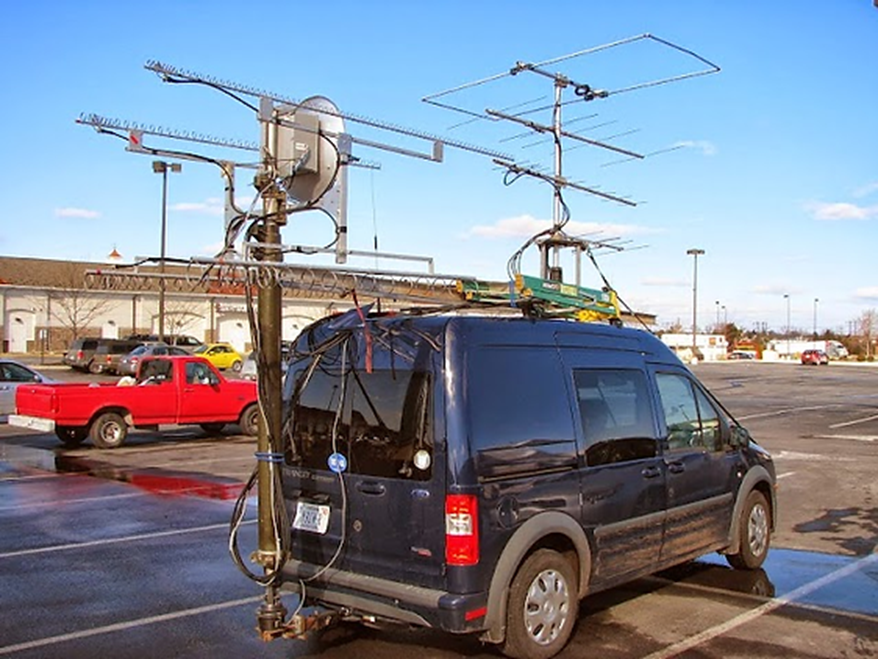
This guy goes all out!!!
DX Info from DX News:
KP5/NP3VI – Desecheo Island. The DXpedition is expected to remain QRV for approximately 30 days, until the scheduled recovery date. The primary mission of this Dxpedition is to provide an All-Time New One (ATNO) to as many amateur radio operators worldwide as possible.
More Info: https://dxnews.com/kp5-np3vi/
Website: https://desecheo2026.com/kp5
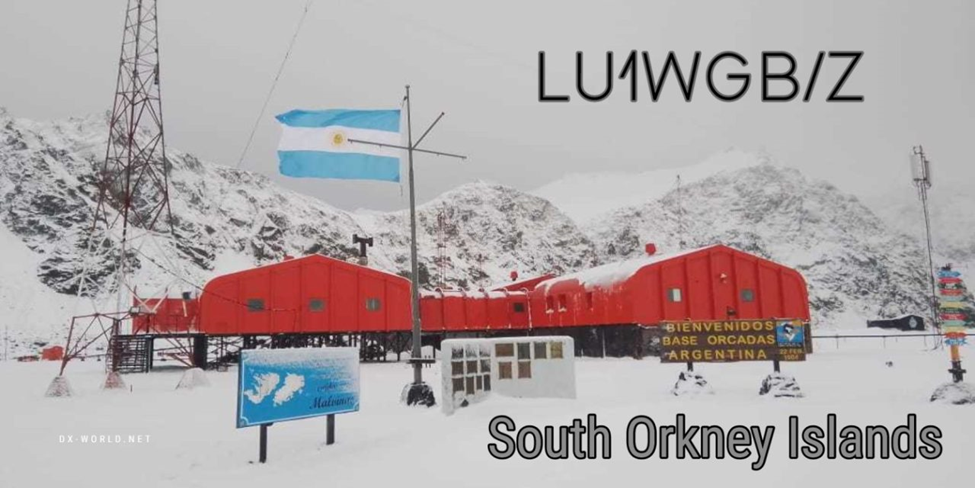
LU1WGB/Z – South Orkney Islands: Gabriel, LU1WGB writes:
Due to life’s twists and turns, I find myself on Laurie Island, South Orkney Islands (Argentine Antarctic Sector) participating in the Antarctic Winter Campaign. I recently received my first piece of equipment: an HF QRP SDR Transceiver with tuner and telescopic antenna for portable use, as well as an ATU-100 tuner.
Conditions are complicated for operating QRP over voice, so I started exploring FT8. With limited resources, several repurposed components, some AI assistance, and a bit of ingenuity, I was able to build an interface. The antenna is also remarkably simple: a connector with two wires.
I will probably be operating QRP FT8 with LU1WGB/Z until mid- February 2026. Occasionally, I may operate from the LU1ZA radio station also located on the island.
Other DX this week on air….
FS, PJ7 ST MARTIN Giovanni, IZ2DPX is active from both islands as FS/call and PJ7/call until January 21, 2026. Activity from 60 to 6 metres using SSB and FT4/8. QSL via home call.
HK0, SAN ANDRES Primarily active from mainland Colombia as HK4/DF3TJ, operator Christoph also has plans to make side-trips to San Andres (NA-033) and Providencia (NA-049). QRV from those islands as HK0/DF4TJ. Dates are not specific but he should be active late December going into January ’26. Modes: CW and SSB. QSL via ON5JC.
HR, HONDURAS Gerard, F2JD is operating as HR5/call from Copan until March 2026. Activity on HF using CW, SSB and FT4/8. QSL via F6AJA direct or bureau.
TL, CENTRAL AFRICAN REPUBLIC Joao, CR7BNW is operating as TL8BNW until June 2026. Activity on 40, 20, 15 and 10 metres using SSB and FT8 with a dipole.
V5, NAMIBIA Gunter, DK2WH is once again QRV as V51WH until March 24, 2026. Activity from a farm near Omaruru from 160 to 6 metres (60m included).
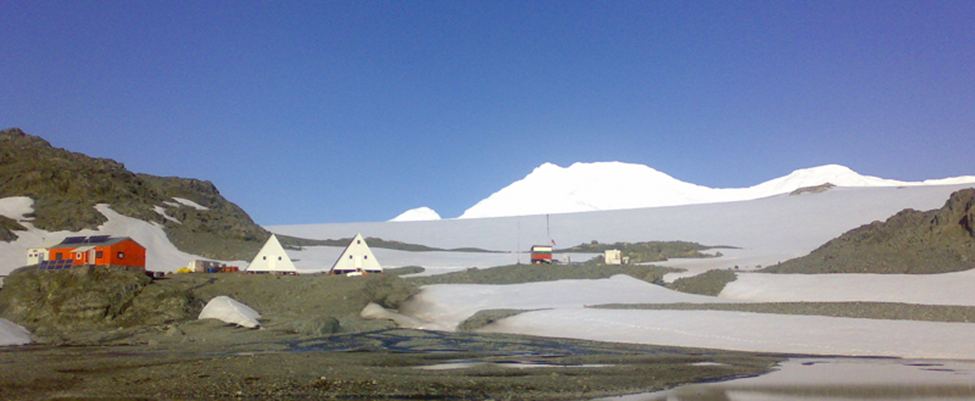
VP8, SOUTH SHETLAND Active when time permits, look for Ivo LZ1AAW to QRV as LZ0A from the Bulgarian Antarctic Base of St. Kliment Ohridski, Livingston Island, South Shetland Islands, AN010 at the end of December 2025 until mid-February 2026. QSL: 2025/26 activity – Via LZ1KDP, P.O.Box 830, 1000 Sofia, BULGARIA.
Z8, SOUTH SUDAN Once again, Diya YI1DZ is active as Z81D, his UN-WFP contract runs until March 30, 2026. Activity from 40 to 6 metres using SSB and FT8. Perhaps some 60 and 80 metres. QTH- Juba, Republic of South Sudan – Locator: KJ54SU, Africa QSL via OM3JW, LoTW
Don’t forget that you can check out any call sign on https://www.qrz.com/ by putting the call in on the top left of the QRZ site just under the QRZ Logo then click Search.
To start the year let’s have a look at the different types of communication in Amateur Radio.
Modes of communication:
Amateurs use a variety of voice, text, image, and data communications modes over radio.
Morse code – Morse code (Continuous Wave – CW) is called the original digital mode.
Modulated continuous wave (MCW) is most often used by repeaters for identification.
Analog voice: AM, SSB, FM
• Amplitude modulation (AM)
• Single sideband (SSB)
• Frequency modulation (FM)
Digital voice: D-Star, DMR & Fusion
Digital voice modes encode speech into a data stream before transmitting it.
• D-STAR – Open specification with proprietary system available from Icom, Kenwood, and FlexRadio Systems.
Hazel Grove (D-Star) VY2DSR 441.850 +5.000 VY2DSR B VY2DSR G
• DMR – Found in both commercial and public safety equipment from multiple vendors.
• System Fusion – from Yaesu.
Summerside (Fusion) VE1CFR 147.315 +0.600 System Fusion / WiresX
WSJT – Weak Signal & WSPR: Weak Signal. WSJT-X implements communication protocols or “modes” called FST4, FST4W, FT4, FT8, JT4, JT9, JT65, Q65, MSK144, and WSPR. These modes were designed for making reliable, confirmed QSOs under extreme weak-signal conditions. https://wsjt.sourceforge.io/wsjtx.htm
Image
Image modes consist of sending either video or still images.
• Amateur television, also known as Fast Scan television (ATV) https://hamuniverse.com/atvfastscantv.html
• Slow-scan television (SSTV) https://www.hamuniverse.com/sstv.html
Text and data: D-Star, PSK & RTTY most popular….
Most amateur digital modes are transmitted by inserting audio into the microphone input of a radio and using an analog scheme, such as amplitude modulation (AM), frequency modulation (FM), or single-sideband modulation (SSB).
• Radio teletype (RTTY) HF Bands. See Getting Started on RTTY here: https://www.rttycontesting.com/rtty/
• PSK31 & PSK63 – Phase-shift keying: See the easy to follow VIDEOS by Randy K7AGE. https://www.youtube.com/watch?v=jQpBGh9RMEQ&list=PL8D7C6EBD6E2081E2
• D-STAR (Digital Data) a high speed (128 Kbit/s), data-only mode. https://evoham.com/dstar-for-beginners/
• FUSION – Yaesu System Fusion, C4FM, and WIRES-X: A beginner’s guide. https://www.besthamradio.com/yaesu-system-fusion-c4fm-and-wires-x-a-beginners-guide/
• APRS – Automatic Packet Reporting System https://cranbrookarc.ca/2025/04/03/beginners-guide-to-setting-up-aprs-automatic-packet-reporting-system/
Hellschreiber, also referred to as either Feld-Hell, or Hell a facsimile-based tele printer. https://www.nonstopsystems.com/radio/hellschreiber-function-operation.htm
• Multiple frequency-shift keying (MFSK) modes: https://www.johndcook.com/blog/2022/03/22/multiple-frequency-shift-keying/
• Olivia MFSK HF & 6M https://www.oliviadigitalmode.org/
• Packet radio (AX25) https://themodernham.com/packet-radio-101-the-ultimate-guide/
• Amateur Packet Radio Network (AMPRNet) https://wiki.ampr.org/wiki/Quickstart
• PACTOR (AMTOR + packet radio) https://www.electronics-notes.com/articles/ham_radio/digimodes/pactor.php
• Amateur tele printing over radio (AMTOR) https://www.electronics-notes.com/articles/ham_radio/digimodes/amtor.php
Activities sometimes called ‘modes’
Certain procedural activities in amateur radio are also commonly referred to as ‘modes’, even though no one specific modulation scheme is used.
• Earth-Moon-Earth (EME) uses the Moon to communicate over long distances on 6M, VHF, and UHF. https://www.n1fd.org/wp-content/uploads/2024/10/EME-I-Getting-Started-in-EME-v2a.pdf
• Satellite – http://w0yl.com/sites/default/files/2021-05/Beginners_Guide_Amateur_Radio_Satellites-K0FFY.pdf
https://amsat.org/wordpress/wp-content/uploads/2023/06/For_Beginners_Compilation.pdf
• EchoLink connects amateurs and amateur stations via the internet. https://echolink.org/
• Internet Radio Linking Project (IRLP) connects repeaters via the internet. https://irlp.net/
• Low transmitter power (QRP) 5W or less sometimes up to 10W on SSB. https://earthrepairradio.com/what-is-qrp-ham-radio/
GL & Gud DX de Ken VY2RU